Rim Country's Wildfire Reality: What Payson Homeowners Need to Know About Insurance
If you own a home in Payson or anywhere across Rim Country, you already know something that most statewide insurance content never quite says out loud: this isn't a place with some wildfire risk around the edges. It's a place built inside the wildland-urban interface, nearly wall to wall. That reality shapes almost every insurance conversation we have with homeowners here, and it deserves a straight explanation rather than the vague, one-size-fits-all treatment most "Arizona insurance" articles give it.
This guide covers what actually makes Rim Country's insurance market different — the geography, the fire history, a housing pattern specific to this area, and what happens after a fire moves through. It also addresses something we think is worth saying honestly: there has been very little agency-level content written specifically for Payson homeowners, and that gap is part of why we wrote this.
Rim Country Is Wildland-Urban Interface By Definition
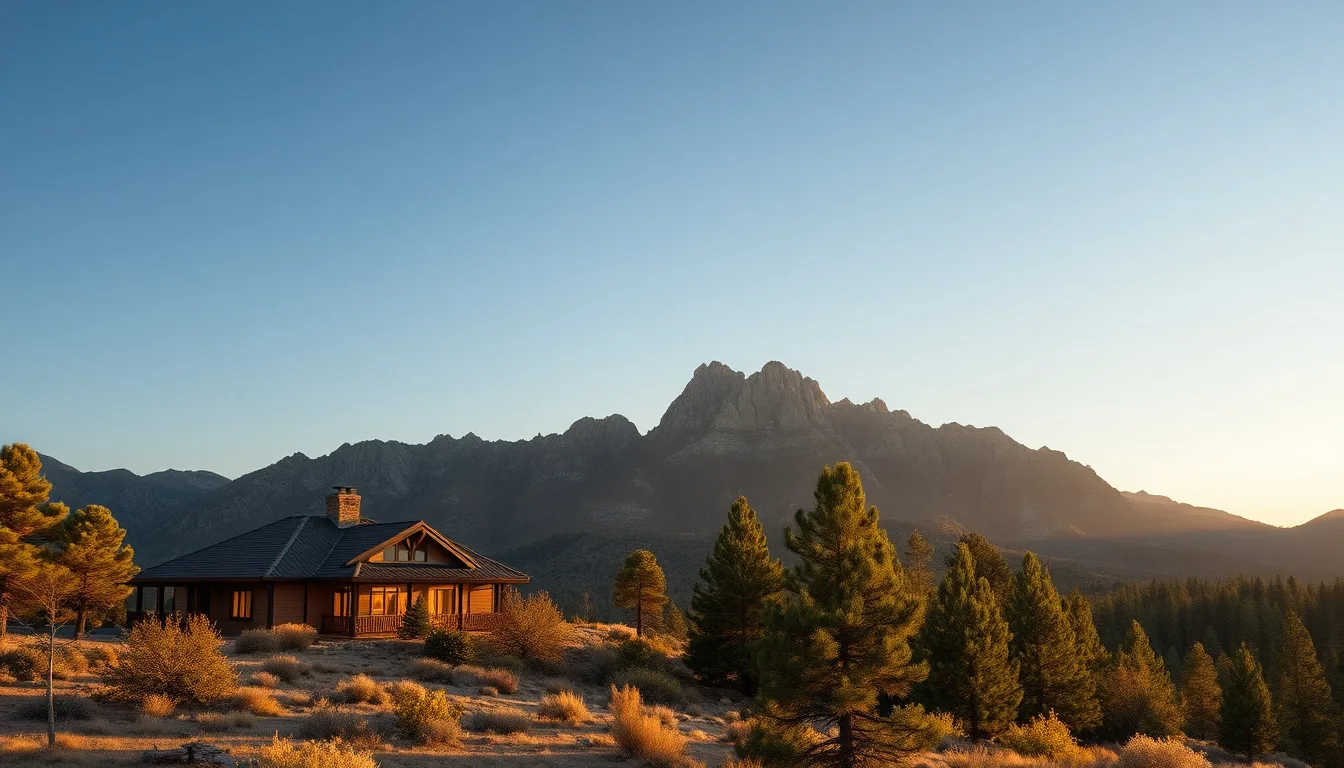
Payson sits at roughly 5,000 feet at the base of the Mogollon Rim, with the rest of Rim Country settling in around 4,900 feet. What defines the area, though, isn't the elevation number — it's what surrounds it. More than 95% of Gila County is public or tribal land, and the 2.9-million-acre Tonto National Forest wraps around most of the communities here. That's not a statistic about the county in the abstract; it's a statement about how close the forest sits to nearly every home in the region.
In most parts of the country, wildland-urban interface — the zone where structures and wildland fuels meet directly — is something insurers flag for a subset of homes on the edge of town. In Rim Country, the edge of town is most of the town. That single geographic fact is the dominant underwriting factor for property insurance here, more than almost anywhere else in the northern Arizona corridor outside Flagstaff's own forest-edge neighborhoods.
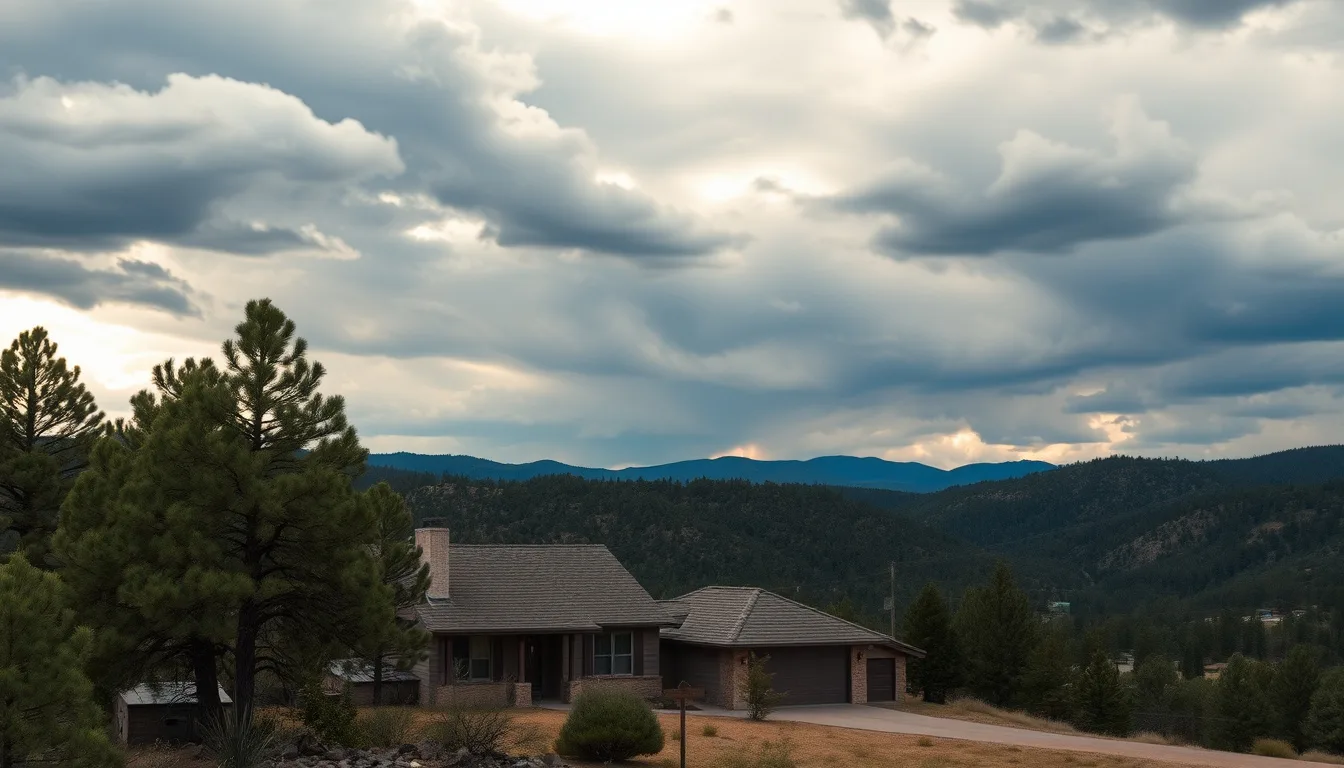
Carriers don't score wildfire risk by city or ZIP code — they score it parcel by parcel, weighing distance to the forest boundary, slope, vegetation density, and how easily a fire crew could reach the property if it needed to. In a community where the forest boundary effectively runs through the whole area, that scoring process touches nearly every application that comes across an underwriter's desk. It's part of why two homes a few streets apart in Payson can get noticeably different offers from the same carrier — the model isn't grading the town, it's grading the lot.
A Fire History That Shaped How Insurers See This Market
Carriers don't price this risk on hypotheticals — they price it on a fire record, and Rim Country's is a long one. The Dude Fire burned through the area in 1990, an early and formative event in how this region came to understand its own exposure. More recently, the Bush Fire in 2020 and the Backbone Fire in 2021 both affected Rim Country communities, part of a pattern of recurring wildfire activity that carriers now build directly into their models for this part of the state.
The event that still anchors the broader region's wildfire memory, though, happened in the neighboring White Mountains area in June 2002: the Rodeo-Chediski Fire. Two fires that merged on June 23, 2002, it burned somewhere between 462,600 and 468,638 acres before being brought under control on July 7 — the largest wildfire in Arizona history until the Wallow Fire surpassed it in 2011. Roughly 30,000 people were evacuated, about 400 homes and other structures were destroyed, and the fire caused an estimated $30 million in property damage on top of roughly $50 million in suppression costs. It happened in the broader Rim Country and White Mountains region, not inside Payson itself, but its scale reset how insurers across this part of Arizona think about forested, high-country risk — and that reset has never fully unwound.
Put together, Dude, Rodeo-Chediski, Bush, and Backbone tell carriers the same thing four different ways: this is a place where large fires happen repeatedly, not a place with a single bad year in its history.
The Manufactured and Modular Home Challenge in the Forest
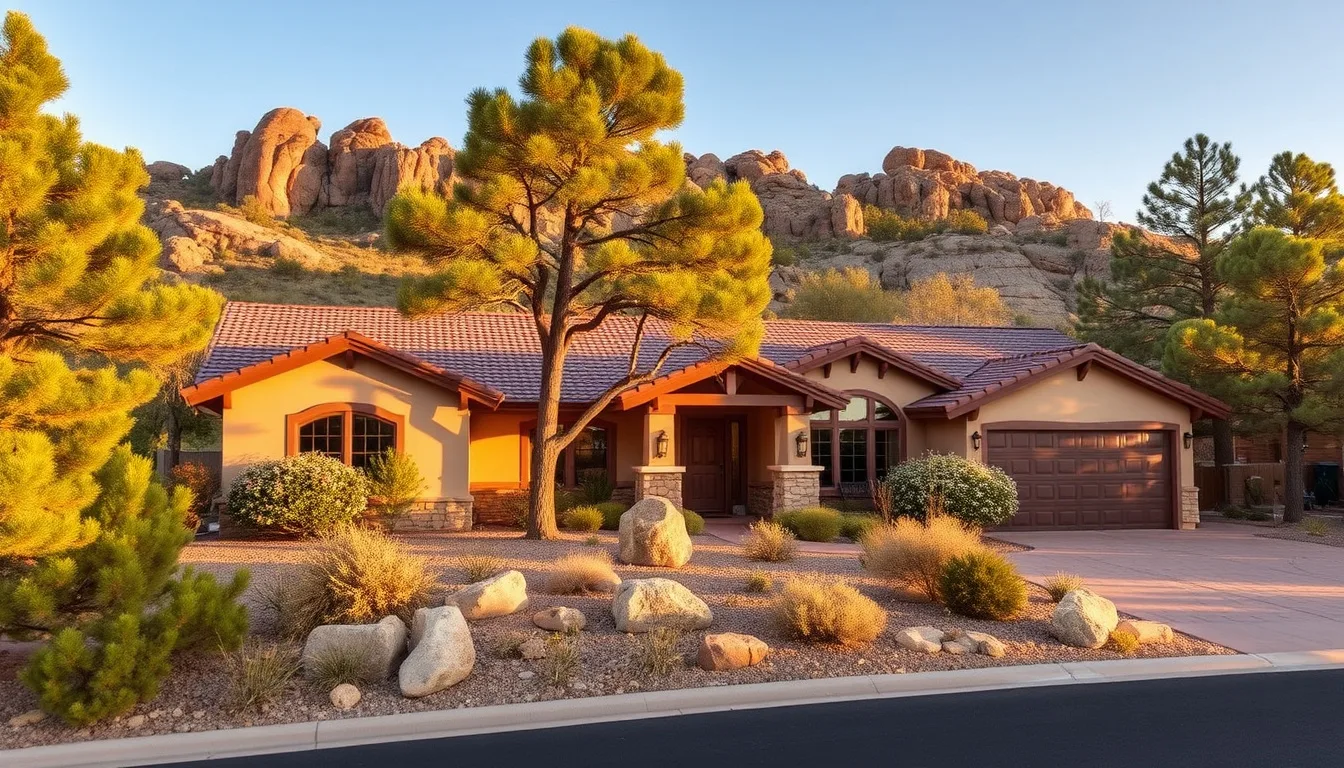
One pattern specific to Rim Country deserves its own section: manufactured and modular homes are a real and common part of the local housing stock, tucked into forested lots throughout the area. That combination — a manufactured home on a wooded, wildland-adjacent parcel — creates a genuinely harder underwriting problem than either factor does on its own.
Manufactured homes are underwritten differently from site-built homes to begin with, with their own construction-type rules, tie-down and foundation requirements, and age-based eligibility limits depending on the carrier. Layer wildfire exposure on top of that, and the pool of carriers willing to write the risk narrows further. It's a real, common situation here, not an edge case, and it's exactly the kind of placement where shopping a genuinely wide set of carriers — including specialty markets built for manufactured-home risk — makes the difference between a workable quote and a flat decline.
What Happens After the Fire: Burn-Scar Flash-Flood Risk
Fire and flood are a package deal in forested country, and Rim Country is no exception. When a fire strips vegetation from a slope, the ground loses its ability to absorb rainfall. Instead of soaking in, monsoon rain runs off fast, carrying water, ash, and debris down drainages below the burn scar — sometimes for years after the fire itself is long contained and forgotten by everyone except the insurance industry.
This matters directly for coverage, because standard homeowners insurance treats flood, mudflow, and debris flow as excluded perils, full stop. If your property sits downslope or downstream of a recent burn scar anywhere in the Rim Country watershed, a separate flood policy isn't an optional extra — it's the piece of coverage doing the specific job your homeowners policy was never built to do. This is worth checking regardless of how far your home sits from the most recent fire; burn-scar hydrology changes for years, not weeks.
Why Payson Homeowners Have Been Underserved — and What We're Doing About It
Here's the part most agencies won't say plainly: there is almost no independent, locally-written insurance guidance for Payson and Rim Country homeowners today. Search for help understanding wildfire coverage here and you'll mostly find generic statewide Arizona content that never once mentions the Tonto National Forest, or captive-agent listings with no real explanation of how this market actually works. For a region where more than 95% of the county is forest, that's a real gap — and it leaves homeowners making coverage decisions with less information than they deserve.
We wrote this guide because Rim Country's insurance reality is genuinely different from the rest of Arizona, not because it fits neatly into a template built for Phoenix or Tucson. The same independent-agency approach that matters in Flagstaff and Prescott matters here, arguably more: Arizona has no FAIR Plan, so when a standard carrier declines a Rim Country home, the path forward runs through specialty and surplus-lines markets, typically at a premium of 20% to 50% over standard rates, rather than through any state-backed fallback. Statewide, the non-renewal rate sits around 0.8%, but forested counties like Gila run well above that baseline — Gila County reached roughly 2.5% in 2022 — which is exactly why shopping multiple carriers, including markets built for wildfire and manufactured-home risk together, matters as much here as anywhere in the corridor.
Getting the Right Coverage in Rim Country
If you own a home in Payson or anywhere across Rim Country, a few things are worth doing regardless of where your policy stands today:
- Document defensible space around the structure — cleared, thinned, and maintained vegetation zones are the single most persuasive piece of evidence you can hand an underwriter.
- Know your construction type on paper — manufactured, modular, or site-built — and make sure your agent is shopping carriers that actually write that construction type in a forested setting, not just carriers that write it in general.
- Check your flood exposure relative to any nearby burn scar, current or past, and treat a standalone flood policy as a real line item rather than an afterthought.
- Ask what tier your home is in — standard admitted market, specialty, or surplus lines — and what specific steps would move it toward a less expensive tier over time.
The Arizona Department of Insurance and Financial Institutions (DIFI) regulates every carrier and agent doing business here and maintains dedicated wildfire resources for homeowners in forested areas, which is worth knowing exists even if the market process, not a regulatory complaint, is usually the faster route to coverage.
None of this means Rim Country homes are difficult to insure across the board — most aren't, and plenty place easily with standard carriers every day. It means the underwriting questions here are different from the ones a generic statewide Arizona quote form is built to ask, and a policy shopped without accounting for forest proximity, construction type, and burn-scar flood exposure is a policy with real gaps hiding in it. The fix isn't complicated; it's just specific to this place.
Rim Country deserves an insurance approach built for what it actually is — forest-edge, wildfire-aware, and full of manufactured and site-built homes alike sitting inside a wildland-urban interface that covers nearly the whole county. As an independent agency, we shop the admitted market first, then specialty and surplus-lines carriers built for exactly this kind of risk, and we'll tell you honestly which tier your home falls into and why. Call us at 844-967-5247 for a straight answer on your Payson or Rim Country home — it costs nothing to find out where you actually stand.
Ready for a real quote?
Independent coverage for the whole northern Arizona high country — free quotes, no pressure.