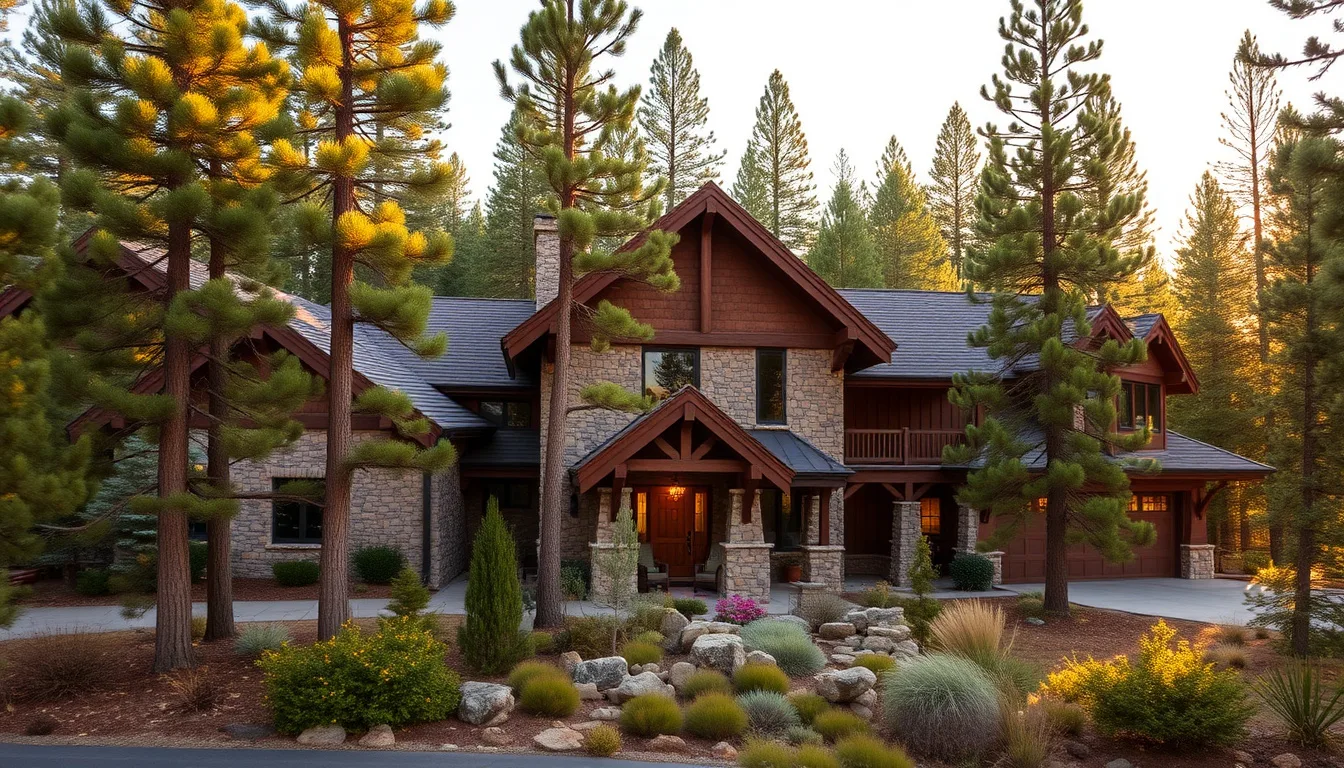
Homeowners Insurance — Flagstaff, Prescott & Payson
Homeowners Insurance in Northern Arizona — Coverage Built for Every Elevation
A home at 7,000 feet in Flagstaff, a four-season house in Prescott, and a forest-edge cabin in Payson don't carry the same risk. We build policies that actually account for the difference.
Why One Homeowners Policy Doesn't Fit the Whole Corridor
Northern Arizona isn't one insurance market — it's three. Flagstaff, the corridor's largest city at 76,445 residents, sits at roughly 7,000 feet and carries real winter risk: snow load, ice, and freeze claims that most "Arizona" insurance products simply aren't built to price. Prescott and Prescott Valley, a combined market of nearly 100,000 people at about 5,400 feet, run a genuine four-season climate with a large retiree population and different asset-protection needs. Payson and Rim Country, at roughly 5,000 feet and ringed by the 2.9-million-acre Tonto National Forest, sit in wildland-urban interface territory where wildfire is the dominant underwriting factor for nearly every home in the ZIP code.
A generic statewide policy written for Phoenix desert risk doesn't reflect any of that. As an independent agency working the whole corridor, we quote each home against the risk profile of its actual elevation and terrain — not a one-size-fits-all Arizona template — and we shop carriers whose appetite matches that specific risk, whether that's a snow-load-aware carrier for a Flagstaff roof or a wildfire-specialty market for a Payson cabin backed by national forest.
What a Northern Arizona Homeowners Policy Must Cover
The bones of a standard HO-3 policy — dwelling, other structures, personal property, liability, loss of use — are the same everywhere. What changes across this corridor is how each piece needs to be sized, and a policy built off a generic Arizona quote engine tends to get several of these wrong at once rather than just one.
Loss of use is the clearest example. A standard policy assumes a short displacement — a burst pipe, a weekend repair. A wildfire evacuation in Flagstaff or Payson can mean days or weeks out of the home under a mandatory GO order, and Additional Living Expense needs to be sized for that reality, not a generic default. The same logic applies to other-structures and ordinance-and-law coverage on older homes in Prescott's historic neighborhoods, where rebuild codes have shifted since the original construction.
- Dwelling coverage set to true local rebuild cost, not a national calculator default
- Other-structures coverage for detached garages, sheds, and guest casitas common on larger mountain and forest lots
- Additional Living Expense (loss of use) sized for a real wildfire evacuation, not a weekend hotel stay
- Ice-dam and frozen-pipe protection written explicitly for Flagstaff's freeze-thaw winters
- Ordinance & law coverage where local rebuild codes have changed since the home was built
- Liability limits that reflect the value of the property and household assets, not a default minimum
Wildfire & the Non-Renewal Problem
Wildfire has directly struck all three hub areas in the last two decades — the Museum, Tunnel, and Pipeline Fires near Flagstaff; the Goodwin and Doce Fires near Prescott; the Rodeo-Chediski, Dude, Bush, and Backbone Fires in and around Rim Country. That history shapes how carriers underwrite here, and the honest answer is that non-renewal is a real, ongoing risk rather than a rare event. Arizona's statewide non-renewal rate is still low — about 0.8% in 2023 — but it concentrates sharply in forested counties: Gila County (Payson/Rim Country) hit roughly 2.5% in 2022, and Navajo County reached 4.8% in a single post-fire-season year. Statewide homeowners premiums are estimated to have risen about 48% between 2021 and 2024, driven largely by wildfire-prone areas.
If you receive a non-renewal notice, don't let coverage lapse while you shop — a lapse makes replacement both harder and more expensive. As an independent agency we re-market a declined or non-renewed home in order: admitted carriers first, then specialty wildfire programs, then the surplus-lines market. Documented mitigation regularly changes the outcome.
No Arizona FAIR Plan: How We Place Tough Homes
Unlike California, Arizona has no FAIR Plan and no state-backed insurer of last resort. When the standard admitted market declines a home — which happens more often on streets backing Coconino, Prescott, or Tonto National Forest — the fallback is the excess & surplus (E&S) lines market: specialty carriers built to write hard risks, typically at 20–50% higher premium and with narrower terms than a standard policy.
That's exactly why the independent-agent model matters more here than in most of Arizona. A captive agent has one company's appetite to offer; an online quote form simply declines a wildfire-zone address outright. We hold access to admitted, specialty, and surplus-lines markets, and we build a documented path — mitigation photos, updated systems, defensible-space records — to move a home back toward standard coverage as conditions allow.
Snow-Load and Freeze Damage — a Flagstaff-Specific Risk
Flagstaff averages around 100 inches of snowfall a year, among the highest totals of any incorporated city in the United States. That volume of snow creates real structural exposure most Arizona-focused insurance content never addresses: roof-load stress on older or under-built roofs, ice-dam formation that backs meltwater under shingles and into the attic, and burst pipes when a cold snap catches an under-insulated crawlspace.
These are the claims we see most often on Flagstaff homes, and they're entirely separate from wildfire risk — a home can face both snow-load exposure in winter and wildfire exposure in the dry pre-monsoon months of the same year. We make sure a Flagstaff policy is priced and structured for winter risk specifically, not treated as a generic statewide home the way a Phoenix-focused carrier might default to pricing it.
Discounts That Actually Work Here
Mitigation isn't just good practice in this corridor — it's underwriting currency that several carriers actively credit, and in some cases the difference between a decline and an offer. The specifics vary by carrier and by how recently a given area has burned, but the categories below are the ones we see credited most consistently across Flagstaff, Prescott, and Payson.
- Documented defensible space around the structure, photographed and dated
- Class A fire-rated roofing and ember-resistant vents
- Firewise-adjacent community mitigation participation where available
- Monitored central alarm and water-leak sensor credits
- Bundling home and auto, still one of the largest single levers on total premium
Replacement Cost Across Three Different Building-Cost Markets
Rebuild costs are not uniform across the corridor. Labor and material logistics into a 7,000-foot mountain town, a 5,400-foot Yavapai County city, and a 5,000-foot forest-edge community aren't identical, and default national rebuild-cost calculators frequently miss that variation — especially after a wildfire-driven demand surge pushes local contractor pricing up faster than a standard policy's inflation guard tracks.
We run a replacement-cost review at every renewal, not only at the point of purchase. Underinsurance is a quiet failure mode: a policy looks fine for years until a total loss pays out well below what the actual local rebuild costs. Inflation guard, an appropriate extended replacement cost endorsement, and honest square-footage math close that gap before it matters.
How to Get a Quote
Quoting a northern Arizona home well takes a short conversation: year built, roof age and type, any mitigation or defensible-space work completed, distance to the nearest forest boundary, and whether the home is a primary residence, a second home, or seasonally occupied. If you have a current declarations page, send it along — we'll build a line-by-line comparison rather than hand you a single mystery number.
Call 844-967-5247 or email josh@contractorschoiceagency.com to start. We serve Flagstaff, Prescott, Prescott Valley, and Payson/Rim Country as our primary corridor, and we also serve Sedona and the Verde Valley (Cottonwood included) as part of the broader northern Arizona service area.
Homeowners FAQs
Honest answers before you switch
The whole corridor — Flagstaff, Prescott, Prescott Valley, and Payson/Rim Country, plus Sedona and the Verde Valley. Risk profiles genuinely differ from city to city, and we quote homeowners coverage accordingly rather than applying one generic Arizona template.
Elevation. Flagstaff sits at roughly 7,000 feet and averages around 100 inches of snowfall a year — among the snowiest incorporated cities in the U.S. That drives real roof-load, ice-dam, and frozen-pipe claims that most Arizona insurance content, written for the Phoenix/Tucson desert climate, doesn't address at all.
Don't let coverage lapse. We re-shop admitted carriers first, then specialty and surplus-lines markets that write wildfire-zone homes. Statewide non-renewal is low overall (about 0.8% in 2023) but concentrates sharply in forested counties — Gila County hit roughly 2.5% in 2022, Navajo County reached 4.8% in a single post-fire-season year.
No. Arizona has no FAIR Plan or state-backed insurer of last resort. If standard carriers decline your home, the fallback is the surplus-lines market, typically 20–50% more expensive with narrower terms — which is exactly why independent-agent access to E&S markets matters this much in the corridor.
Construction costs vary meaningfully across the corridor — labor and material logistics to a 7,000-foot mountain town, a 5,400-foot Yavapai County city, and a 5,000-foot forest-edge community aren't identical, and default carrier rebuild-cost calculators often miss that. We recommend a replacement-cost review at every renewal, not just at purchase.
Living in the high country deserves coverage that gets it.
Independent, local-minded insurance for Flagstaff, Prescott, Sedona, and Payson — homeowners, auto, business, and more.