Honest answers before you switch
17 real questions from northern Arizona homeowners, renters, and business owners — wildfire risk, cost, and coverage.
Wildfire & High-Country Risk
The questions everyone in this corridor eventually asks.
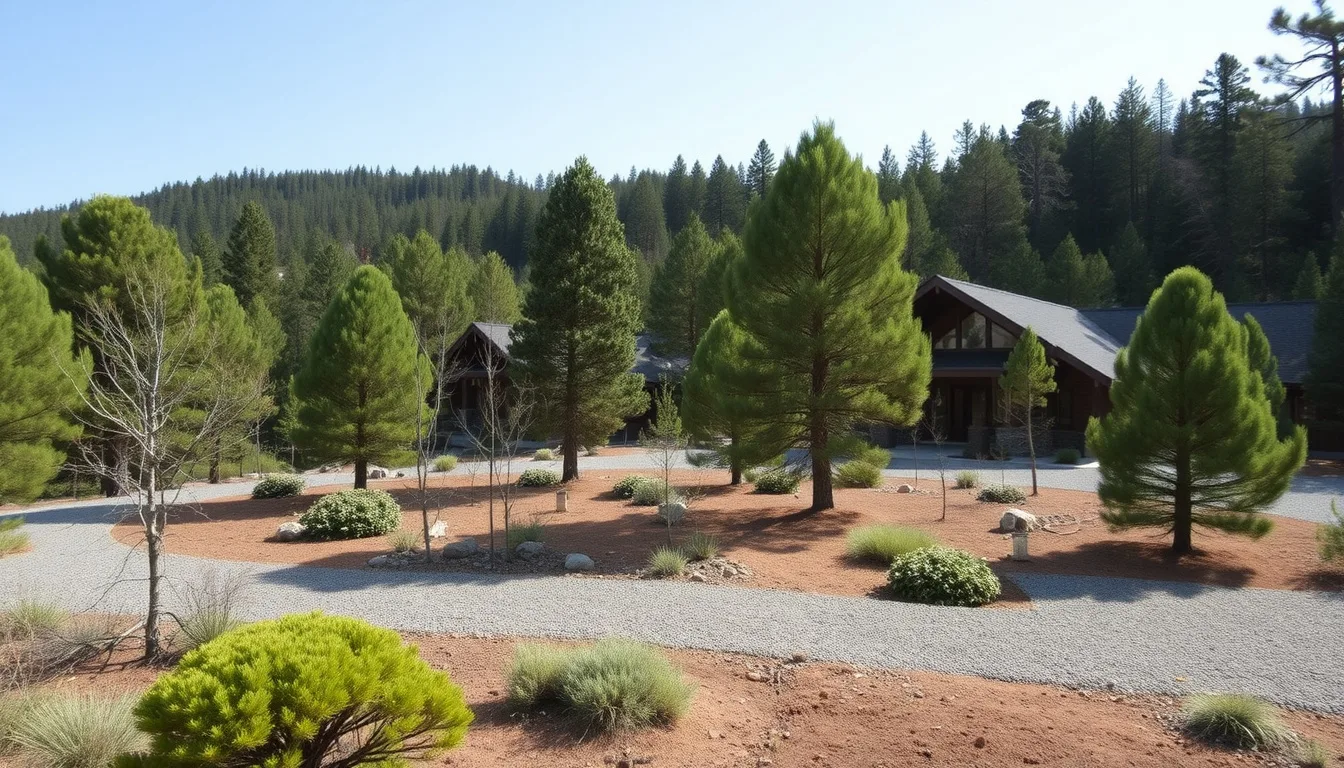
Yes, across the whole corridor. Flagstaff, Prescott, and Payson all sit at the edge of national forest land (Coconino, Prescott, and Tonto National Forests respectively) — the classic wildland-urban interface (WUI) that drives both wildfire likelihood and insurance non-renewal risk. Carriers score homes individually based on proximity to forest boundary, slope, and vegetation, not just city or ZIP code.
Defensible space is cleared, managed vegetation around a home that slows an approaching fire and gives firefighters room to work. It can meaningfully improve how a carrier scores your property, though it isn't a guarantee against non-renewal on its own — some high-risk parcels get declined even with excellent defensible space.
Yes — non-renewals tied to wildfire-risk modeling are a real, recurring outcome in forested Arizona counties, not a rare edge case. If it happens, an independent agency can usually place you with a different admitted carrier or a surplus-lines market.
No — Arizona does not operate a state-run FAIR Plan. Homeowners who can't place with a standard admitted carrier typically move to the surplus-lines market, which is more expensive but still real, licensed coverage.
The Corridor
Elevation, climate, and which cities we actually serve.
The whole corridor — Flagstaff, Prescott, Prescott Valley, and Payson/Rim Country, plus Sedona and the Verde Valley. Risk profiles genuinely differ from city to city (snow-load risk in Flagstaff, four-season Yavapai County conditions in Prescott, forest-edge wildfire exposure in Payson), and we quote accordingly rather than applying one generic Arizona template.
Higher elevation means real snow load on roofs, freeze/thaw cycles that stress plumbing, and — in forested areas — the wildfire exposure that comes with living near dense timber. Flagstaff at ~7,000 feet, Prescott at ~5,400 feet, and Payson at ~5,000 feet each carry a different mix of these factors.
Yes — Prescott's four-season, retiree-heavy population and lower snow load create a different risk and coverage mix than Flagstaff's university-town, high-snowfall profile, even though both sit in wildfire-prone country.
Auto
Mountain roads bring their own considerations.
It can — winter driving conditions, elk and deer strikes on forest highways, and longer commute distances between mountain communities are all factors carriers may weigh differently than they would for a flat, urban driving profile.
Arizona requires minimum liability limits of 25/50/15 (per current state law) — but minimums rarely reflect what you actually need to protect your assets, especially with the vehicle-repair and towing realities of mountain terrain.
Home Values, Construction & High-Country Living
What replacement cost actually means at elevation.
Construction costs vary meaningfully across the corridor — labor and material logistics to a 7,000-ft mountain town, a 5,400-ft Yavapai County city, and a 5,000-ft forest-edge community aren't identical, and default carrier rebuild-cost calculators often don't capture that. We recommend a replacement-cost review at every renewal, not just at purchase.
Rebuild cost — market value includes land value and local market conditions that have nothing to do with what it actually costs to reconstruct the structure if it's a total loss.
Renters & NAU
A genuinely open lane most agencies ignore.
Yes — a landlord's policy covers the building, not a tenant's personal belongings, and most off-campus leases near NAU don't include contents coverage. Renters insurance is inexpensive and covers theft, fire, and liability.
Some landlords and property managers require proof of renters insurance as a lease condition — check your specific lease, but it's worth having regardless of whether it's required.
Typically only the named policyholder and their immediate family are covered — roommates generally need their own separate renters policy for their own belongings.
General Agency & Regulation
Why independent matters here more than most places.
A captive agent can only sell one carrier; an online form applies generic filters. We represent multiple carriers plus surplus-lines markets — decisive here, where wildfire scoring and elevation-driven risk make carrier appetite vary sharply from street to street and city to city across the corridor.
Yes — call 844-967-5247 or email josh@contractorschoiceagency.com and we'll shop your property across carriers at no cost.
Usually a same-business-day response for standard homeowners, auto, and renters lines. Wildfire-scored properties and surplus-lines placements can take a bit longer since they involve more carrier-side underwriting.
Question we didn't cover?
Call 844-967-5247 and ask an agent directly — or send it through the contact form and get an answer within a business day.