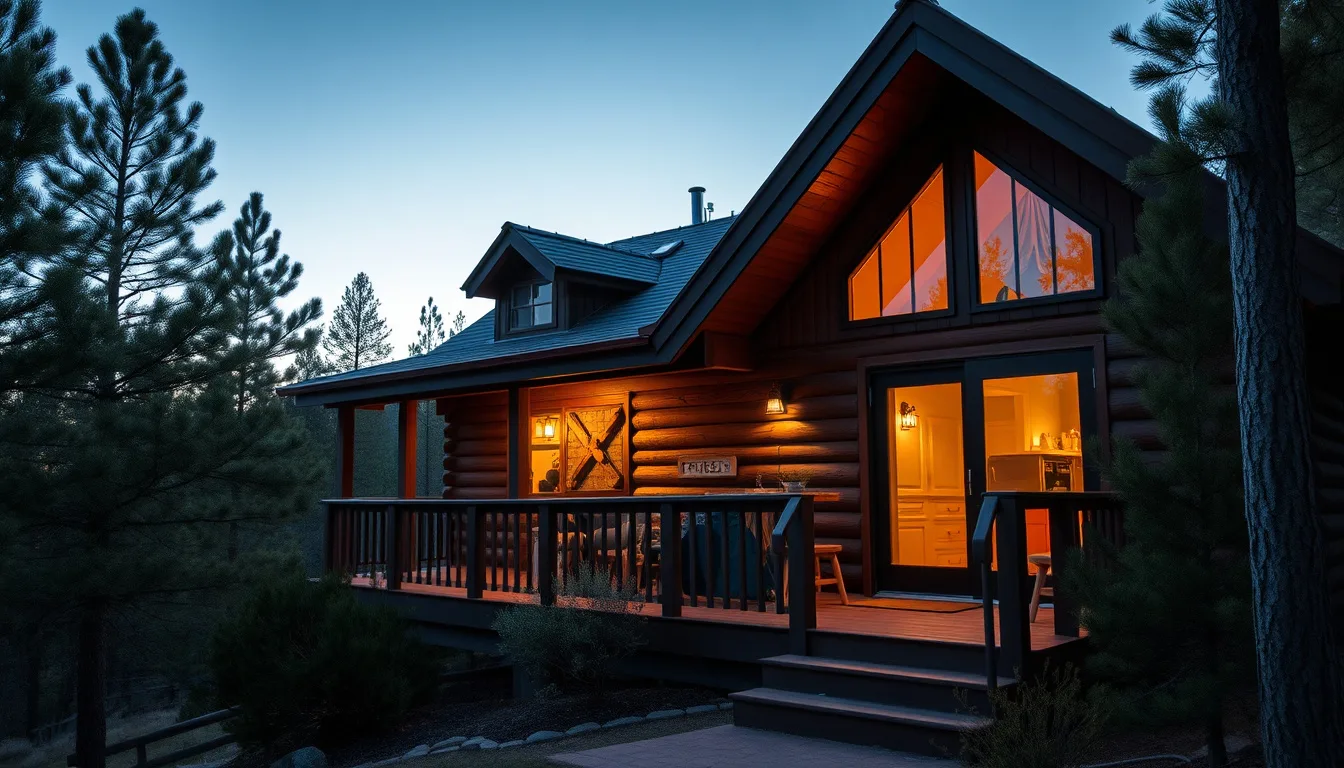
Vacation Rental & STR Insurance — Flagstaff, Prescott & Payson
Short-Term Rental & Vacation Home Insurance in Northern Arizona
From a cabin near the Rim to a Flagstaff guest house a few miles from NAU, a growing number of northern Arizona homes are earning income on Airbnb and Vrbo. We write the commercial-grade coverage those homes actually need.
A Growing, Real — But Still Modest — Corridor Market
Short-term rentals are a genuine and growing part of the northern Arizona high country: cabins in the forest around Payson, guest houses and converted properties in Flagstaff within a few miles of NAU, and a rising number of listings in Prescott and Prescott Valley as the four-season Yavapai County market draws more weekend and seasonal visitors. This isn't a niche curiosity anymore — it's a real segment of the local housing stock, and it needs insurance built for it.
It's also a fundamentally different scale of market than a destination town built around tourism. This corridor's STR presence is real but modest, and we treat it that way in how we advise owners: not as a specialty hub of its own, but as one coverage line among several that a corridor property owner is likely to need — often alongside a landlord policy on a second property or an umbrella over the whole picture.
Whatever the scale, the underwriting question is the same everywhere: is a paying stranger sleeping in this house on a regular basis? If the answer is yes, the policy needs to be built around that fact from day one, not discovered after a claim.
Demand also swings by season in ways that shape how a policy should be built. Flagstaff sees a real winter and ski-season rental pull tied to Snowbowl and NAU events; Payson and Rim Country lean toward summer cabin season as valley residents escape the heat; Prescott and Prescott Valley run more evenly across the calendar. An owner whose booking calendar is genuinely seasonal should tell us that up front, since occupancy patterns and off-season vacancy both factor into how a carrier prices and writes the policy.
Why Your Homeowners Policy Won't Cover Guests
A standard homeowners policy is written for an owner living in the home, and it excludes business use — renting to paying guests, even occasionally, is a business activity most HO-3 policies simply don't contemplate. A guest who falls on the deck, a guest-caused kitchen fire, water damage from an unfamiliar appliance left running: a homeowners carrier can deny every one of those claims once it learns the home was operating as a short-term rental.
The risk isn't limited to the specific claim, either. Undisclosed rental activity can give a carrier grounds to question the whole policy relationship at renewal or at claim time, right when you need it most. If a cabin near Payson or a guest house in Flagstaff is listed on Airbnb or Vrbo and your insurance agent doesn't know about it, you very likely don't have the coverage you think you have — and the time to find that out is now, not after a loss.
What Real STR Coverage Looks Like
Proper short-term rental insurance is a commercial-landlord hybrid, built around the reality that strangers are staying in the home on a rotating basis. It's a different policy form than a standard homeowners or even a standard landlord policy, and it comes from a narrower set of carriers who understand the exposure.
We place these programs across the corridor for cabins, converted guest houses, and full-time vacation homes, matching the policy to how the property is actually used rather than how a generic Arizona quote form assumes it's used.
- Commercial-grade liability sized to guest-hosting exposure, not owner-occupant limits
- Building and contents coverage that includes guest-caused damage beyond normal wear
- Loss of rental income when a covered loss takes the property's calendar offline
- Amenity exposures: hot tubs, fire pits, decks, and equipment left for guest use
- Coverage that follows the booking regardless of platform — Airbnb, Vrbo, or direct
Airbnb's AirCover and Vrbo's Host Protections Are Not Insurance
Airbnb's AirCover and Vrbo's host-protection programs are platform policies, not insurance you own. They come with significant exclusions, actual-cash-value quirks, and coverage that applies at the platform's discretion rather than under a contract you can enforce in a dispute. They also don't cover bookings taken off-platform — direct guests, repeat visitors, or word-of-mouth stays.
Treat platform protection as a backstop that sits behind a real STR policy, never as your primary coverage. It's a genuinely common and genuinely expensive mistake: an owner assumes AirCover means they're insured, then finds out after a serious guest injury or property loss that the platform's program falls well short of what a dedicated STR policy would have paid.
Wildfire and a Commercially-Used Forest-Edge Cabin
A meaningful share of this corridor's short-term rentals sit exactly where the wildfire exposure is highest — cabins backing Tonto National Forest near Payson, homes near Coconino National Forest around Flagstaff, and properties near the Prescott National Forest boundary and Bradshaw Mountains. Insuring a wildfire-scored, forest-adjacent home that's also used commercially is one of the harder placements in the whole corridor, because the carrier is underwriting two overlapping risk profiles at once.
This is exactly the situation an independent agency with access to specialty and surplus-lines markets exists for. Arizona has no FAIR Plan, so when a standard STR program won't touch a forest-perimeter cabin, the path forward runs through excess-and-surplus carriers who do write that risk — typically at a real cost premium, but with the property actually covered rather than sitting exposed on a policy that would deny the claim.
Whether lost booking income during a fire-season closure or evacuation is covered depends entirely on how a given policy's business-income and civil-authority language is written — this is one of the first things we check when reviewing or placing STR coverage on a forest-edge property.
Local Permits and Registration: Check Before You List
Short-term rental regulation in Arizona sits under a state framework that generally preempts outright municipal bans, while allowing cities to require permits, safety standards, and proof of insurance. What that means in practice — application requirements, fees, occupancy limits, tax registration, any minimum liability figure a city may set — varies by jurisdiction and can change, so we always tell owners to verify current rules directly with the city or town where the property sits (Flagstaff, Prescott, Prescott Valley, or Payson each administer this independently) before listing or renewing.
What we can control is the insurance side of that equation: most municipal STR programs require proof of liability coverage as a condition of the permit, and we build policies that satisfy that requirement while also being adequate for the actual risk — which is often a meaningfully higher bar than the permit minimum.
We also tell owners not to treat a neighboring city's rules as a template for their own property. A permit process that works in one corridor town can look entirely different a thirty-minute drive away, and requirements do get revised. Confirming directly with the local planning or licensing office before you list — and again before each renewal — is the safest habit, and it's a five-minute call worth making before the first booking rather than after a complaint or an inspection.
Getting Compliant and Getting Quoted
If you're buying a property to list, converting an existing home, or discovering that your current policy was never built for guest-hosting, the sequence is the same: confirm your local permit and tax obligations directly with the city, then put real STR coverage in force before the next booking — not after an incident forces the question.
Send us the address, how the property is used, and which platforms you book through, or call 844-967-5247. We place short-term rental coverage for owners across Flagstaff, Prescott, Prescott Valley, and Payson, including forest-edge cabins that require a specialty or surplus-lines placement.
Vacation Rental / STR FAQs
Honest answers before you switch
Almost never. Standard homeowners policies exclude business use, and renting to paying guests — even occasionally — counts as business activity. A guest injury or guest-caused fire can be denied outright, and undisclosed rental activity can put your whole policy at risk. A short-term rental needs a dedicated STR policy, not a homeowners policy stretched to cover something it was never written for.
No. AirCover and Vrbo's host-protection programs are platform arrangements, not insurance policies you own — they carry real exclusions, pay at the platform's discretion, and don't cover bookings taken off-platform. Treat them as a backstop behind a real STR insurance policy, not as your primary coverage.
Usually yes, though it may require a specialty or surplus-lines carrier rather than a standard program. Arizona has no FAIR Plan, so when a wildfire-scored, forest-adjacent home is also used commercially, we shop excess-and-surplus markets built for exactly that combination of risk. It typically costs more than a standard STR policy, but it means the property is genuinely covered.
Most Arizona cities require some form of registration, tax filing, and proof of liability insurance for short-term rentals, but the specific requirements vary by jurisdiction and can change. Always confirm current rules directly with the city or town where your property sits before you list. We build insurance coverage that satisfies typical permit requirements and is adequate for the actual risk.
Sometimes, and it's often cleaner at claim time to have one agency managing the whole picture. But the best structure for an owner with multiple properties sometimes splits lines deliberately — for example, a surplus-lines STR policy on a forest-edge cabin alongside a standard landlord policy on a long-term rental. We'll tell you when combining coverage helps and when it doesn't.
Living in the high country deserves coverage that gets it.
Independent, local-minded insurance for Flagstaff, Prescott, Sedona, and Payson — homeowners, auto, business, and more.