Auto Insurance — Flagstaff, Prescott & Payson
Auto Insurance for Northern Arizona — Beyond the State Minimum
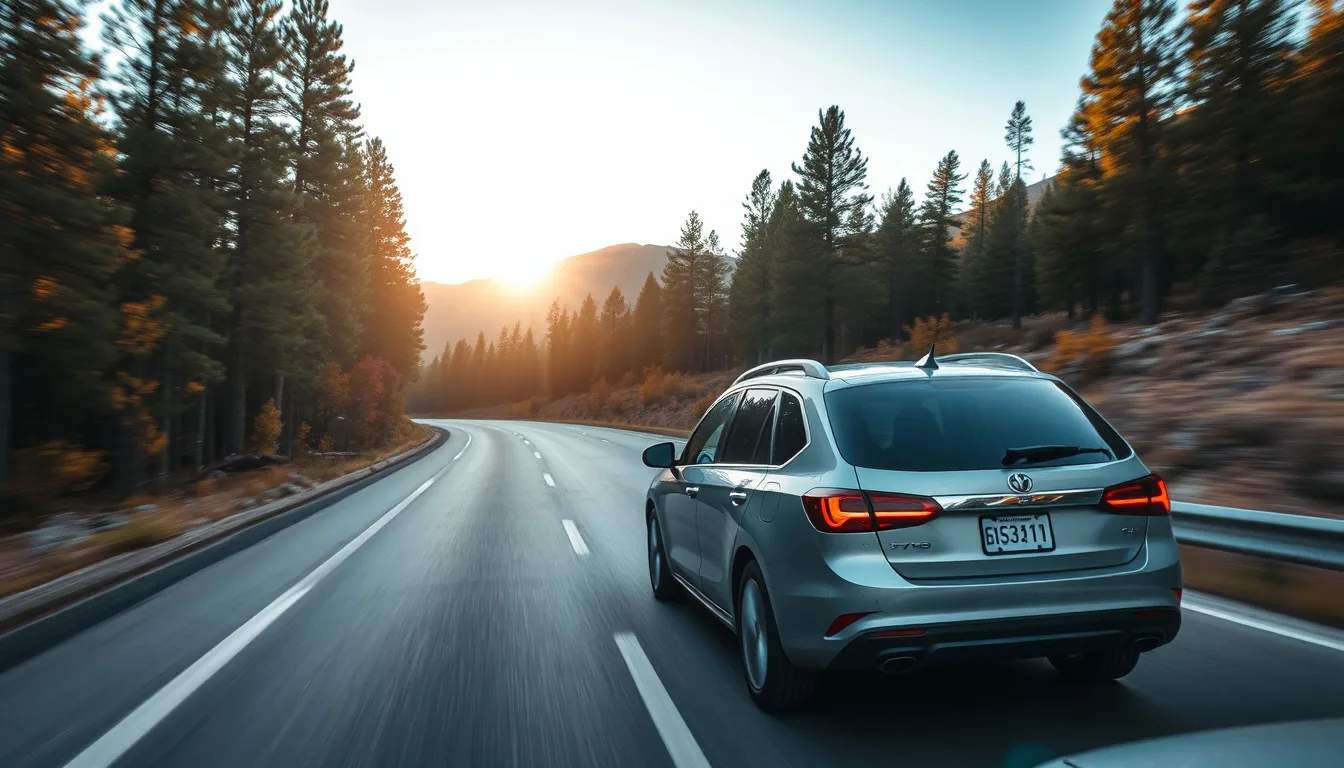
Arizona's 25/50/15 minimum was not written for I-17 in a snowstorm or an elk crossing at dusk on US-89. We build real coverage for northern Arizona's mountain highways.
Arizona's 25/50/15 Minimum Is a Floor, Not a Plan
Arizona requires minimum liability limits of 25/50/15 — $25,000 in bodily injury coverage per person, $50,000 per accident, and $15,000 in property damage — on every auto policy issued or renewed since July 1, 2020, when SB1087 raised the previous 15/30/10 limits. That was a real increase, but it's still a legal floor, not a financial plan. A single serious injury claim can exceed $25,000 quickly, and $15,000 in property damage won't replace many of the trucks and SUVs on corridor roads today.
Arizona is also an at-fault state: if you cause a crash, the other driver's medical bills, lost wages, and vehicle damage land on you and your policy, and whatever your coverage doesn't pay can be pursued from your savings and future income. For most northern Arizona households we recommend 100/300/100 as a realistic starting point, not the state minimum a quote form defaults to.
There's a quieter gap in minimum-limits thinking too: liability coverage pays other people, not you. A driver carrying only 25/50/15 who causes a crash gets nothing toward their own vehicle from that policy. Most drivers we meet at minimum limits didn't choose them deliberately — it was simply the cheapest number an online form produced, with no one explaining what it actually buys on a mountain highway.
Why Northern Arizona Drivers Need Higher Limits
This corridor carries a genuinely different traffic mix than the rest of the state. I-17 and US-89 funnel commuter and tourist traffic up and down the mountain grade into Flagstaff; I-40 runs heavy freight and cross-country traffic straight through town; and Flagstaff itself adds a large population of young, first-time NAU student drivers navigating winter roads for the first time. Prescott and Prescott Valley carry their own commuter and seasonal-resident traffic across Yavapai County's four-season roads, and Payson sees a steady flow of Phoenix-area visitors heading up the Beeline Highway into Rim Country.
More unfamiliar drivers on mountain roads means higher odds that you will eventually need your own limits — and higher odds the other driver won't carry enough. Flagstaff sees the heaviest traffic of any city in the corridor, which tracks with what we see on the ground: a large, traffic-heavy, university-anchored city produces real day-to-day exposure that a smaller high-desert town simply doesn't.
Uninsured/Underinsured Motorist Coverage
UM/UIM is arguably the most important upgrade on a northern Arizona auto policy. I-17, I-40, and US-89 all carry heavy tourist and commuter volume through the corridor, and not every one of those drivers carries adequate coverage — some carry only their home state's minimum, and some carry none at all.
Uninsured and underinsured motorist coverage pays your own medical bills, lost income, and injury damages when the at-fault driver can't. We recommend UM/UIM limits that match your liability limits, not a reduced default — this coverage responds directly to the corridor's tourist- and commuter-heavy highway mix.
Comprehensive Coverage: Winter Roads and Elk Strikes
Comprehensive — not collision — is what pays when the road environment itself damages your vehicle, and northern Arizona's environment is genuinely different from the rest of the state. Flagstaff's winter driving conditions (snow, ice, and elevation-driven weather changes) are unlike anywhere else in Arizona, and comprehensive coverage combined with real collision limits matters far more here than in a desert-climate city.
Elk and deer vehicle strikes are a documented hazard on I-17, I-40, and US-89 through ponderosa pine forest, and animal strikes fall under comprehensive, not collision — a liability-only policy pays nothing for them. If you drive these highways regularly, especially at dawn or dusk during fall and winter migration periods, comprehensive is not optional.
Windshield damage from road sand and de-icing gravel is another Flagstaff-specific comprehensive claim that a desert-climate policy rarely anticipates, and it's worth checking whether your policy waives the deductible on glass repair — a small detail that saves real money over a full winter of mountain driving.
Bundling Home and Auto Across a Hard Property Market
In most places, bundling home and auto is a simple discount. In this corridor's wildfire-affected property market, it can also be a placement strategy — some carriers will stretch further on a homeowners policy in a wildfire-scored area when the auto business comes with it. As an independent agency we quote your whole household across multiple carriers to find that leverage.
We'll also tell you when bundling isn't the right move. In parts of the corridor, the strongest structure is a specialty or surplus-lines home policy paired with a standard-market auto policy from an entirely different carrier — we optimize for the best total outcome, not the tidiest single-carrier package.
This is a conversation worth having at every renewal, not just at initial quote — a household's best carrier pairing in Flagstaff or Prescott can shift year to year as wildfire scoring and carrier appetite change, even when nothing about the household itself has changed.
Trucks, Trailers, and Forest Recreation Vehicles
Households across the corridor rarely stop at one sedan. We write pickups and work trucks, utility and travel trailers, and the OHVs, ATVs, and snowmobiles that are common recreation vehicles around Flagstaff's forest trails and Rim Country's national forest access near Payson. Prescott and Prescott Valley add their own pattern on top of that — a large retiree population with RVs and towables that need their own coverage conversation, separate from the daily-driver policy.
- Pickups, work trucks, and commercial-use questions sorted correctly
- Travel trailers, utility trailers, and toy haulers
- OHVs and ATVs — standard auto policies do not cover off-highway vehicles operated on Arizona roads
- Snowmobiles for Flagstaff-area winter recreation
- Motorcycles and other powersports vehicles
NAU Students and Part-Year Drivers
Flagstaff's NAU population brings a large number of young and first-time drivers to the corridor every year, many navigating winter mountain roads for the first time. We write student auto policies with good-student and driver-training discounts where available, and we help parents understand whether a student driver belongs on a family policy or needs a separate one.
The corridor also has a real part-year population — snowbirds in Prescott, seasonal residents in Payson's cabin country — and vehicles that sit unused for months benefit from storage-period adjustments rather than paying full-year premium for a vehicle that's parked most of the winter or summer.
With NAU's total enrollment above 28,000 and roughly 57% of students living off-campus, a large share of Flagstaff's student population is also insuring an apartment or shared house, not just a car — we routinely bundle a student's auto policy with renters coverage for a combined discount.
Getting an Auto Quote
A quote starts with a short conversation: drivers, vehicles, your current declarations page, and how you actually use each vehicle — commuting on I-17, hauling a trailer to Rim Country, or letting an OHV handle weekend duty. Because we represent multiple carriers, one conversation produces several real options side by side instead of a single company's take-it-or-leave-it number.
If your current policy still reads like the state minimum, bring it in — the gap between 25/50/15 and real protection is usually smaller in dollars than people expect, and considerably larger in what it does for you after a bad day on a mountain highway.
Call 844-967-5247 or email josh@contractorschoiceagency.com. We serve Flagstaff, Prescott, Prescott Valley, and Payson/Rim Country as our primary corridor, plus Sedona and the Verde Valley.
Auto FAQs
Honest answers before you switch
Minimum liability of 25/50/15 — $25,000 bodily injury per person, $50,000 per accident, $15,000 property damage — for all policies issued or renewed since July 1, 2020 (SB1087 raised it from the previous 15/30/10). Those limits go fast in a serious accident; we typically recommend 100/300/100 or higher, especially given the corridor's mountain-highway traffic.
Both interstates carry heavy tourist and commuter traffic through the corridor, and not every driver carries adequate coverage. UM/UIM pays your medical and injury costs when the at-fault driver can't — one of the most important upgrades on a northern Arizona auto policy.
Only if you carry comprehensive coverage. Wildlife strikes are a documented hazard on I-17, I-40, and US-89 through ponderosa pine forest — liability-only policies pay nothing for animal-strike damage.
Your liability and comprehensive coverage apply year-round, but Flagstaff's real winter conditions — snow, ice, and elevation-driven weather — are a genuine reason to carry higher limits and full comprehensive/collision rather than state-minimum coverage, especially if you're new to mountain driving.
Living in the high country deserves coverage that gets it.
Independent, local-minded insurance for Flagstaff, Prescott, Sedona, and Payson — homeowners, auto, business, and more.